INVERTED MONOTUBE
Lateral rigidity where MacPherson strut loads demand it.

FIND PRODUCTS FOR YOUR VEHICLE
Not listed? REQUEST AN APPLICATION →
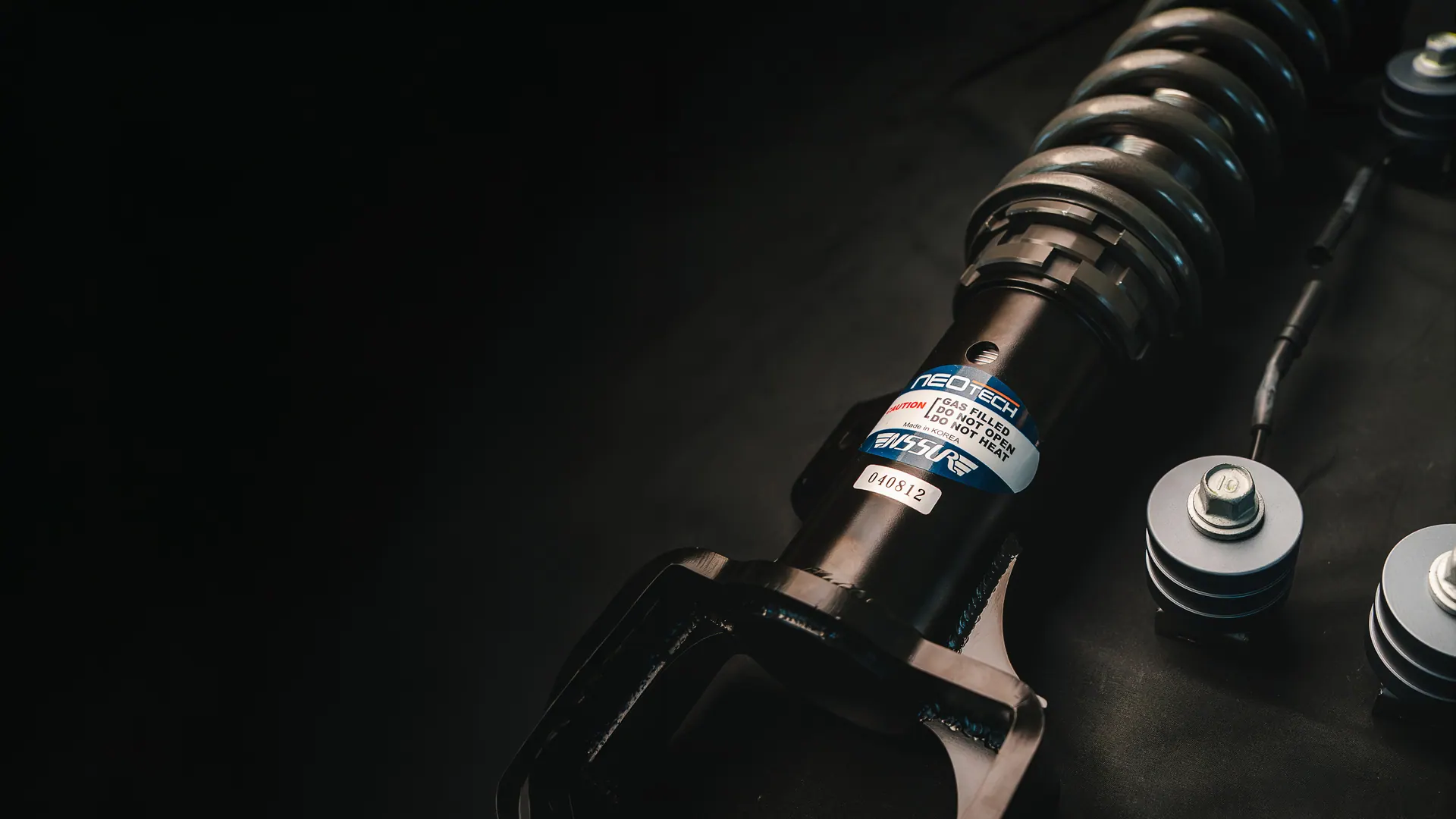
Each system is individually engineered through its internal architecture, spring rates and damping characteristics—including inverted monotube construction for higher-performance applications.
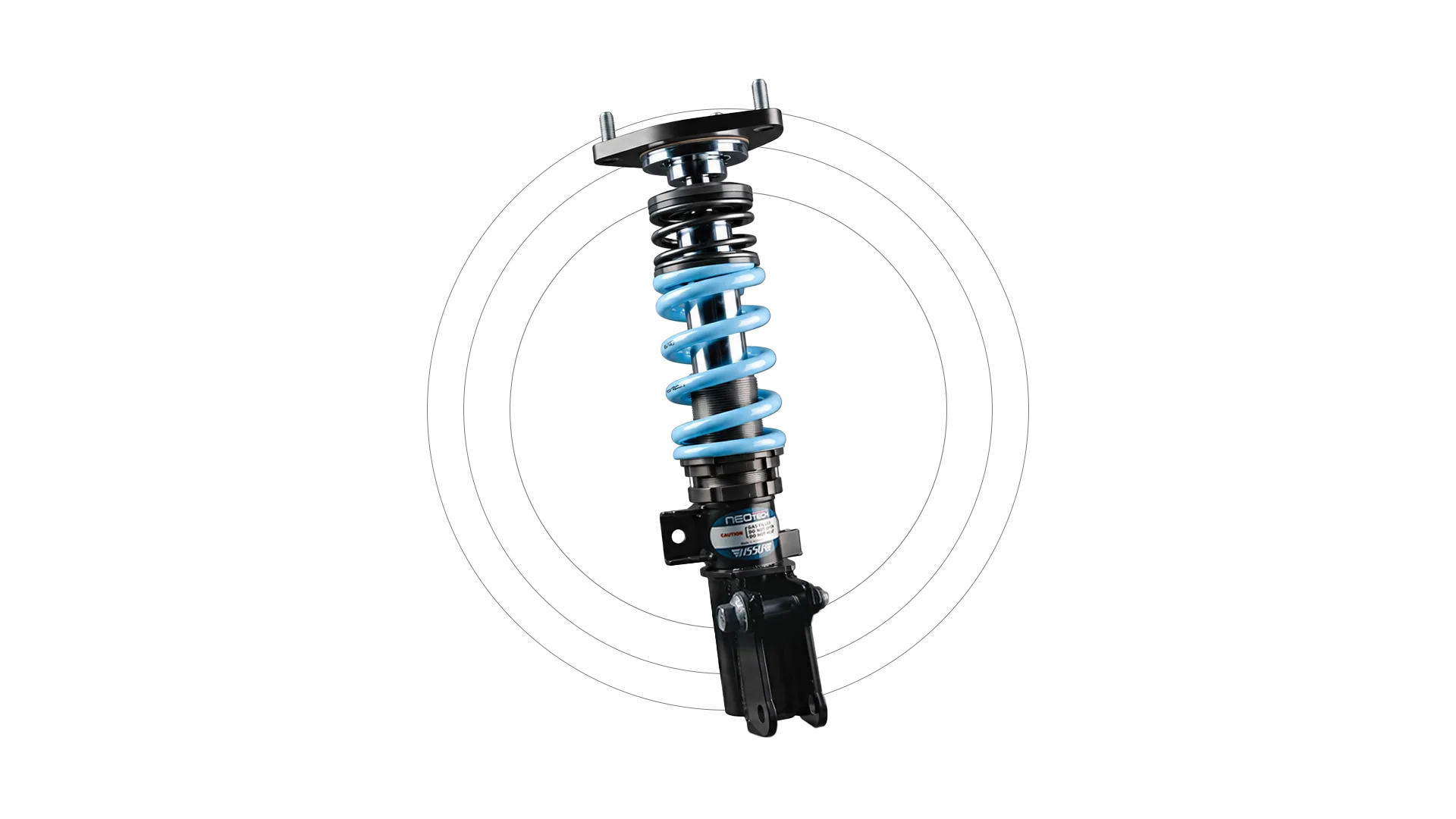
Motorsport-grade damping and bespoke valving curves developed with Neotech specialists.
EXPLORE NEOTRACK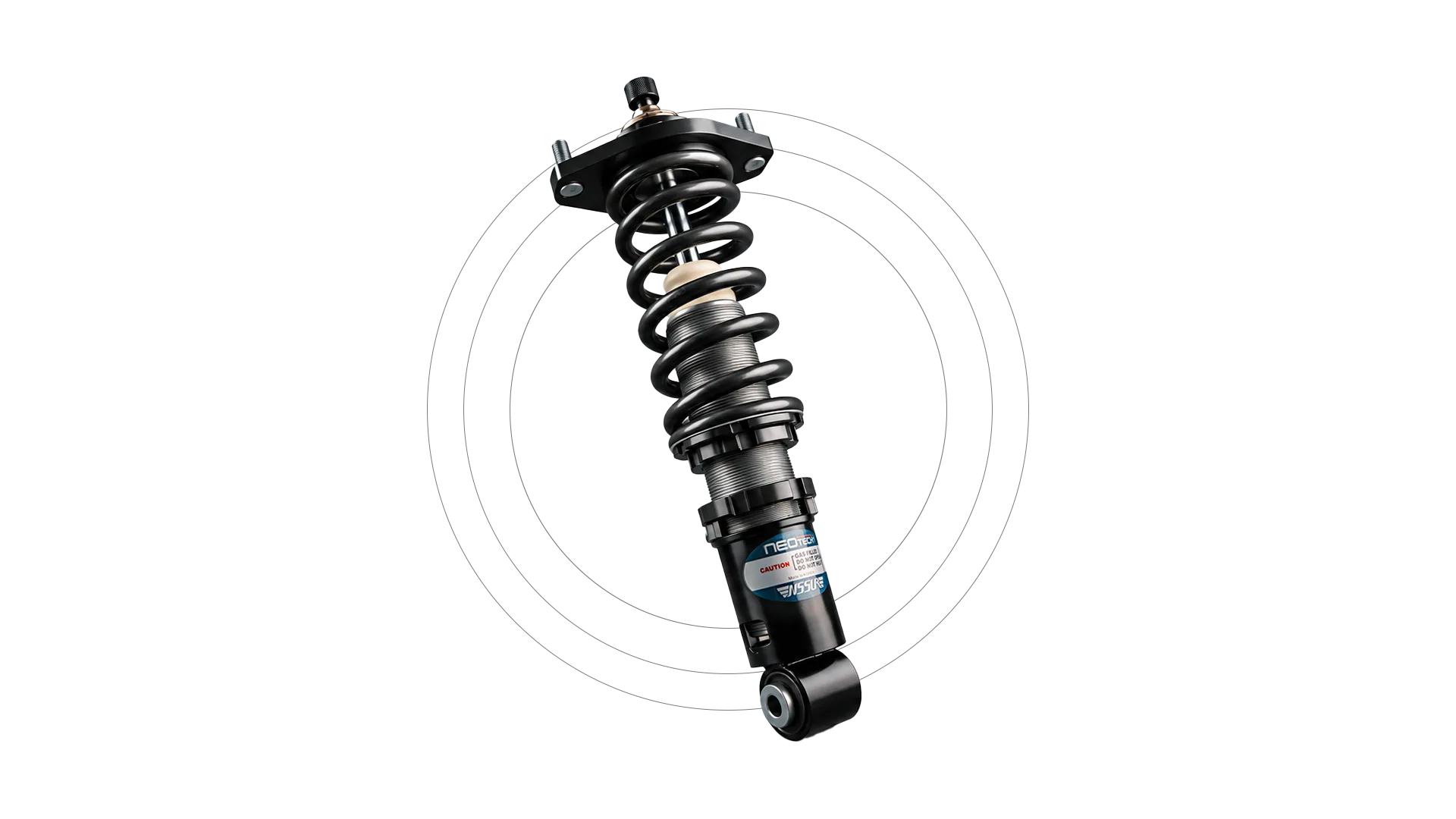
Wider spring rate selection, custom damping within ±20% of specification, and chassis control for drivers who set the car up themselves.
EXPLORE NEOSPORT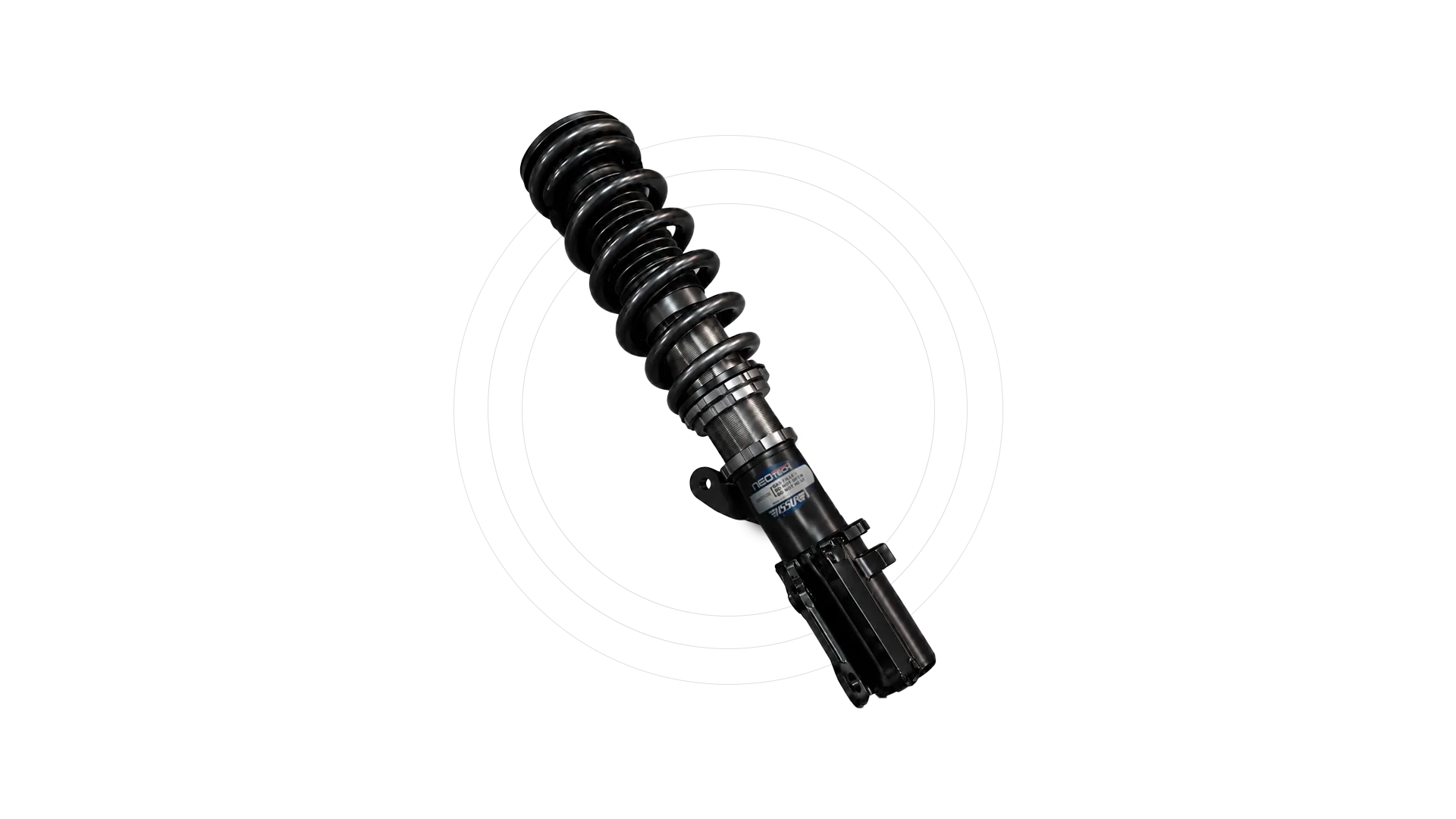
Adjustable damping and ride height with a refined cruising feel and reduced body roll.
EXPLORE NEOSTREETSWIPE OR SELECT SYSTEM
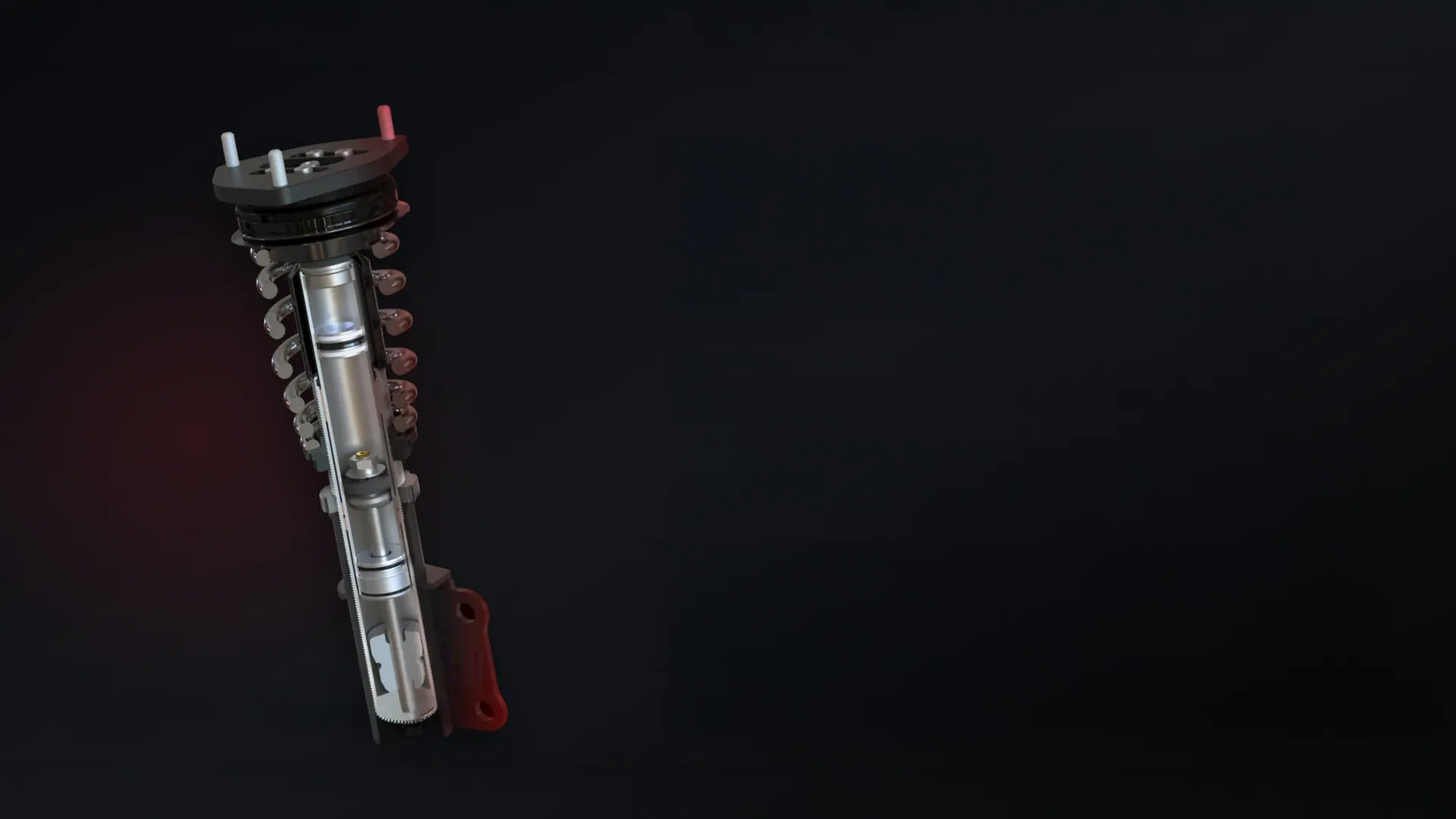
Lateral rigidity where MacPherson strut loads demand it.
Body control through the handling zone without harsh impact spikes.
Camber adjustment with isolation from unwanted road noise.